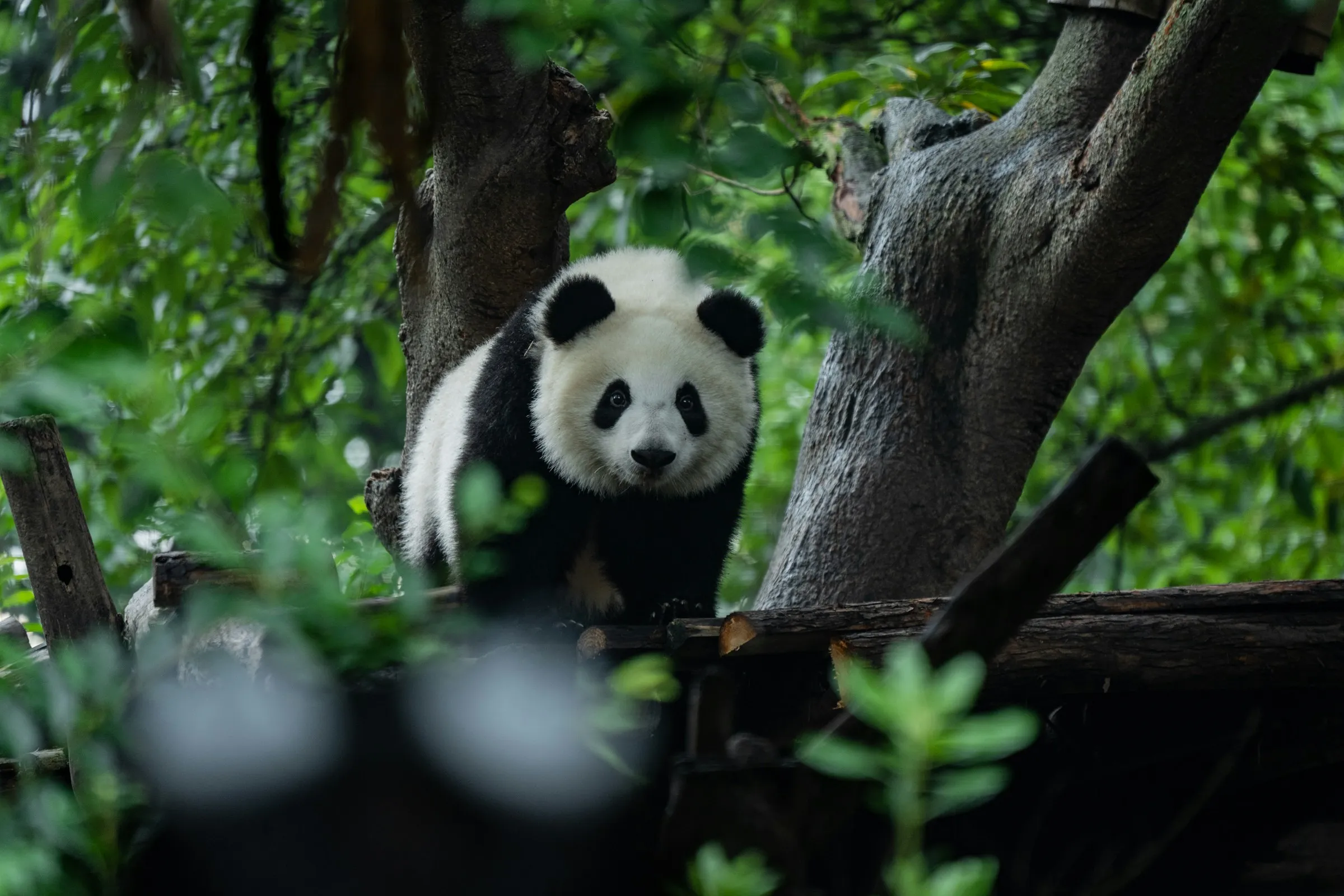
Pandas, teahouses, and the road to the mountains
Chengdu成都
Chengdu rewards a slow pace — teahouses and hotpot, not a checklist. Only two things really need booking ahead: the Panda Base (official site, a morning slot) and, in peak season, the face-changing opera. Everything else you can wing.
Getting around
Metro, Didi, and paying for it
The metro is the easy way around — lines 1, 2, 3 and the 7 loop cover almost everything a visitor wants, and line 18/19 run out to Tianfu Airport in about 45 minutes. Tap your Alipay or WeChat QR at the gate; no separate card needed.
For anything off the metro, use Didi (the app has an English mode) — it’s cheap and removes the “does this taxi take a meter” problem. Street taxis are plentiful but at stations and tourist spots some will quote a flat fare; insist on the meter or just book a Didi. Shared bikes (Meituan, Hello) are everywhere for short hops.
For the western day trips, the intercity train from Xipu station reaches Dujiangyan and Qingcheng Shan in about 30 minutes. Chengdu East station handles the high-speed lines to Chongqing, Xi’an and beyond — and it’s roughly an hour from Tianfu Airport, so leave time if you’re connecting.
Money
What a day here costs
Shoestring
¥150–250
per day
Comfortable
¥400–650
per day
No thought
¥1200+
per day
| Hostel dorm | ¥50–110 |
|---|---|
| Mid-range hotel | ¥250–500 |
| Nicer hotel | ¥650–1400 |
| Cheap meal / street food | ¥12–35 |
| Sit-down meal, per person | ¥60–130 |
| Metro ride | ¥2–7 |
| Typical day trip, per person | ¥150–400 |
Rough ranges in yuan, per person, for a mid-2020s trip — a guide for budgeting, not a quote. Chengdu is well cheaper than Beijing or Shanghai. Cash is almost never needed — Alipay and WeChat QR work everywhere, including street stalls, and both now link to a foreign card.
Eat
What to eat, and where
Chengdu is a UNESCO City of Gastronomy — this is the reason to come. Not all of it is fiery: dumplings, wontons and many noodle bowls are mild.
Hotpot (火锅)
Order a 鸳鸯 split pot so you get a plain broth alongside the chilli-oil one.
Chuan chuan (串串)
Skewers you cook yourself, paid by the stick. The casual, local version of hotpot.
Rabbit head (兔头)
The local dare. Spiced or five-spice; order one to try before committing.
Dan dan noodles & Zhong dumplings
The classic light lunch. Zhong dumplings come in a sweet-savoury chilli sauce.
Sweet water noodles (甜水面)
Thick chewy noodles, sweet-and-numbing sauce. Mild heat, very moreish.
Fuqi feipian (夫妻肺片)
Cold sliced beef in chilli oil and Sichuan pepper — the benchmark cold dish.
Where to actually eat: Yulin (玉林) for real neighbourhood restaurants and bars; Jianshe Road (建设路) for a snack crawl; and Kuixinglou Street (奎星楼街), right next to Kuanzhai Alley, which is where locals go while tourists queue next door. Jinli and Kuanzhai are worth one evening stroll for the atmosphere, not for a proper meal.
Itinerary
A rough plan
- Day 1
Old Chengdu, in the centre
Wuhou Shrine & Jinli → People's Park (tea + ear-cleaning) → Wenshu Monastery → an evening stroll through Kuanzhai Alley, dinner on Kuixinglou Street
- Day 2
Pandas, then a slow afternoon
Panda Base for opening (~07:30) → Jinsha Site Museum → Chunxi Road / Taikoo Li (the climbing-panda photo) → a drink by the river at Jiuyanqiao
- Day 3
One big trip (pick one)
Dujiangyan + Qingcheng Shan, or Leshan Giant Buddha, or Sanxingdui — or a relaxed half-day at Huanglongxi old town
Two days covers the city comfortably. Add this third day only if a day trip appeals; there's no shame in a spare afternoon in a teahouse.
Day trips
Worth leaving the city for
Giant Panda Base
Book the official slot and go for opening (~07:30). Pandas nap by late morning.
Book a tourDujiangyan & Qingcheng Shan
A 2,200-year-old irrigation system plus a Taoist mountain, both UNESCO-listed. Easiest western day trip.
Leshan Giant Buddha
The world's largest stone Buddha, carved into a river cliff. Expect queues on the stairway down.
Book a tourSanxingdui Museum
Bronze-age masks unlike anything else in China; a big new hall opened in 2023. Book ahead.
Huanglongxi old town
A genuinely atmospheric riverside old town with a lot of street food, and close in. Crowd guides call it skippable; I think it's a nice slow half-day.
Tianfu New Area lakes (Luxi / Xinglong Lake)
Modern Chengdu — landscaped lakes, art, cafés. Not a classic sight; good if you've done those or want a change of pace.
Booking links are affiliate links — the site may earn a commission if you book, at no extra cost to you.
Watch-outs
Local things to know
- Panda Base tickets: book on the official site or mini-program. People reselling "sold-out" tickets near the gate are scalpers.
- "Art student" / tea-ceremony approach near Chunxi Road: a friendly English-speaker invites you to a gallery or teahouse, then a large bill lands. Just decline and walk.
- Hotpot heat: "mild" (微辣) is still hot by most standards. The split pot is your friend; so is plenty of the cooling soy-milk or herbal drink.
- Station taxis: at Chengdu East and the airport, use the official rank or Didi rather than drivers touting inside the hall.
- Weather: Chengdu is grey and humid much of the year. Spring and autumn are the payoff; don't come expecting blue skies in between.
- Eat off the tourist lanes: Jinli and Kuanzhai Alley are for the atmosphere. Walk five minutes to Kuixinglou Street or take the metro to Jianshe Road for the actual food.
Where to stay
Which area to base yourself
-
Chunxi Road / Taikoo Li
Best first-timer base: central, on metro 2 and 3, walkable to shopping, snacks and the People's Park teahouse. Livelier and pricier.
Find a hotel here -
Tianfu Square
Geographic centre, metro interchange, close to Wenshu Monastery and the museums. A bit more business-district in feel.
-
Yulin / Tongzilin
Where locals eat and drink — leafy, low-rise, great food, quieter nights. Less English, fewer big hotels; better if you've travelled China before.
-
Near Chengdu East station
Only worth it if you have a very early train. Otherwise it's a charmless transit zone, 20–30 minutes from the sights.
Booking links are affiliate links — the site may earn a commission if you book, at no extra cost to you.
In the city
Sights: go, maybe, skip
- Go Giant Panda Base — early slot, see day trips above.
- Go People's Park (人民公园) — the Heming teahouse, bottomless tea, and the ear-cleaning guys with tuning forks.
- Go Wenshu Monastery (文殊院) — the city's nicest working temple, with a good vegetarian hall for lunch.
- Maybe Jinsha Site Museum (金沙遗址) — gold Sun Bird and ancient Shu bronzes, in the city. Pairs with Sanxingdui if that civilisation grabs you.
- Maybe Sichuan opera / face-changing at Shufeng Yayun — touristy but the bian lian act genuinely delivers. Book in peak season. Book tickets
- Maybe Wuhou Shrine & Jinli — Three Kingdoms history next to a snack lane; do them together, one evening.
- Maybe Jiuyanqiao (九眼桥) — riverside bar strip; go in the evening for the lit-up Anshun Bridge and a drink.
- Maybe Du Fu Thatched Cottage — gardens honouring the Tang poet; pleasant if you have a slow afternoon.
- Skip Global Center (环球中心) — "world's largest building" is a photo stop and a mall, not a half-day.
- Skip Kuanzhai Alley in daytime — packed and commercial; if you go, go late evening for the lantern-lit lane.
Booking links are affiliate links — the site may earn a commission if you book, at no extra cost to you.
FAQ
Common questions
How many days do I need in Chengdu?
Two days covers the city at an easy pace. Add a third for the Panda Base and a fourth for one day trip (Dujiangyan, Leshan or Sanxingdui).
When is the best time to visit?
March–June and September–November. Chengdu is overcast and humid much of the year; summer is hot and sticky, winter damp and grey. Pandas are out year-round but livelier in cooler weather and in the morning.
How do I get to the Panda Base?
Metro line 3 to Panda Avenue then the shuttle, or a Didi (~30–40 minutes from the centre). Aim to arrive for opening around 07:30 — by late morning the pandas are asleep.
Which airport does Chengdu use?
Tianfu International (TFU), about 50 km southeast, is the main international gateway — metro line 18 or 19 into town in ~45 minutes. Shuangliu (CTU) is closer to the centre but now mostly domestic.
Is the food always very spicy?
A lot of it is, but not all. Dumplings, wontons, sweet-water noodles and many breakfast bowls are mild. In hotpot, order a 鸳鸯 (split) pot so half the broth is plain.
Chengdu or Chongqing — which one?
Do both if you can; they're about an hour apart by high-speed train. Chengdu is relaxed — teahouses, pandas, gardens. Chongqing is dramatic and vertical, with an even fiercer hotpot.
Next